

Adapting Yoga Postures: Start with the Foundation
Want to Know the Secret to Adapting Yoga Postures with Ease? Start with the Base of Support!
The simple way to learn how to adapt any posture.
If you have participated in my yoga anatomy courses or any of the Yoga Anatomy School teacher trainings, you know that it's best to start with the foundation of a yoga posture when assessing alignment and helping students. The foundation of the posture is the key to creating a stable and balanced practice. It's all about what's in direct contact with the ground, and it's intimately linked to the concept of the base of support.
If you have an understanding of the base of support, you can easily adapt any yoga posture for any student!
Let's break this down further to understand how the foundation of a yoga pose is the starting point for enhancing alignment and providing support to students, particularly those who are recovering from injuries or facing physical challenges.
Foundation and Base of Support - What's the Connection?
To grasp this concept, think of the foundation as the part of your body that touches the ground during a yoga pose. In a standing pose, it's your feet; in a seated pose, it's your sit bones; in a kneeling pose, it's your shins, knees, and the tops of your feet. The foundation is the connection between your body and the Earth, and it plays a vital role in maintaining balance and stability.

The base of support, on the other hand, relates to the area on which your foundation rests. It's like the amount of area covered by the supporting structure for a building. Imagine a building with a narrow foundation – it's more likely to wobble and be unstable. It has a relatively small base of support. In contrast a building with a bigger foundation has a relatively large base of support and therefore provides greater stability and support You could also consider the use of toy blocks. If there is just one block touching the ground as the foundation, the structure has a smaller base of support and is less stable. If you use many blocks that start on the ground, a larger and more robust structure can be built because the base of support is more expansive.
Expand the Base of Support for Stability; Narrow the Base of Support for A Challenge:
A large base of support provides more stability, generally making a yoga posture seem more supportive and perhaps "easier." Think about how much of the body is in contact with the floor in Savasana. While Savasana can be challenging in it's own way, most students find it to be a less physically challenging posture than most. In contrast, a posture like Tree has only one foot on the ground. In other words it has a very small base of support. This small base of support leads to the the student needing more physical balance and strength. You could say it is a more challenging posture.


What does the foundation have to do with adapting yoga postures?
When students are dealing with injuries or limitations or just need a more supportive yoga practice, they will benefit from a broader base of support with each posture. Expanding the base of support in a yoga pose involves widening the area on which their foundation rests. This not only enhances stability but also minimizes the risk of straining an injured area.
Let's explore some practical examples of how to adapt yoga postures by adjusting the base of support.
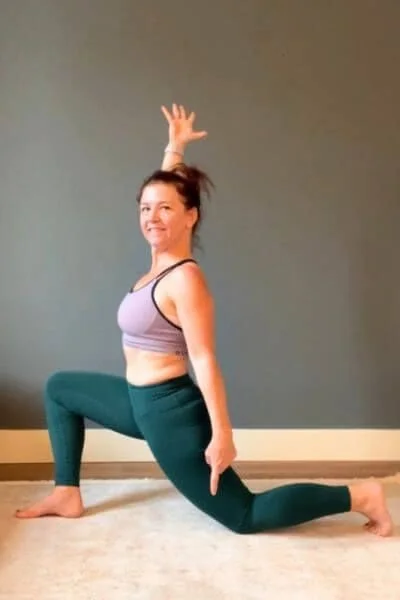
Lunge: In the classic lunge pose, students typically have two points of support - one foot in front and one foot behind. This pose has the perfect opportunity to transition from a two-point support to a stable tripod. Encourage students to put their back knee down. This simple adjustment instantly broadens the base of support, turning it into a tripod, and significantly increases stability. Creating a situation of increased stability in the posture requires less muscular strength by the student. This can help them build strength while reducing strain on the joints.
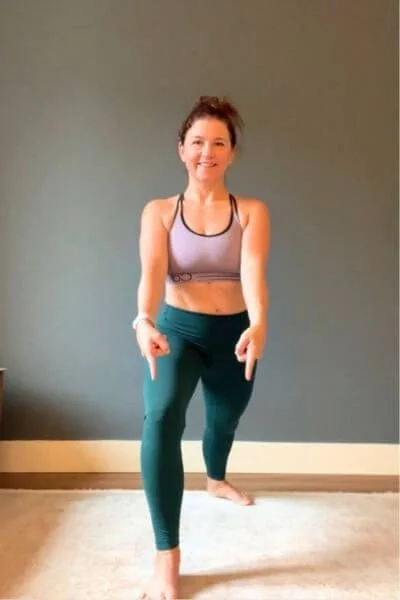
Warrior One: In Warrior One, advise students to step their feet further apart from left to right. While this posture is sometimes taught to have the front heal aligned the the arch of the back foot, that puts the feet one one line. Instead, encourage students to put the feet on two imaginary lines about hip width apart from each other. This widens the base of support, increasing stability. It also allows for easier movement of the hips and for the front knee to align more comfortably over the ankle.
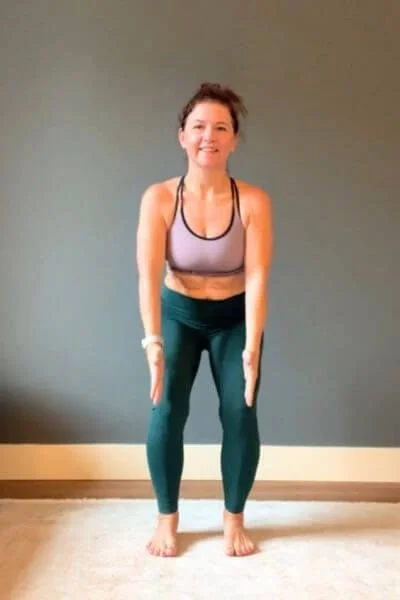
Chair: To make chair more accessible for those with balance or knee concerns, or who simply need more support, suggest that they widen their stance by separating their feet further apart. This provides added stability.
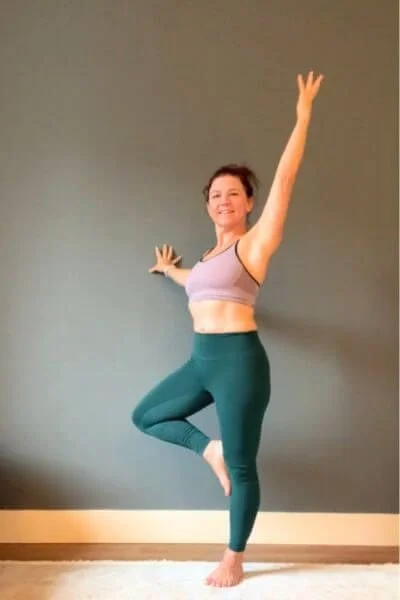
Tree Pose: For balancing postures like Tree Pose, students with ankle or foot issues or who are struggling to find balance can benefit from placing a hand on a wall. This additional touch point expands their base of support, helping them maintain balance.
Starting with the Foundation is Key to Adapting Yoga Postures for any student!
In essence, the foundation of a yoga posture sets the stage for the entire practice. It's the point of connection with the Earth, where alignment begins. By focusing on the foundation, we can determine if students will benefit from increasing the base of support to provide more stability. Or perhaps a student is ready for more challenge. Then it's time to decrease the base of support.
Understanding the relationship between the foundation and the base of support is fundamental in helping students, especially those who are healing from injuries. By adapting the foundation, you provide a stable platform for their practice, allowing them to move toward healing and transformation at their own pace. Yoga is about finding balance between effort and ease, and it starts with the foundation.
Ready to teach yoga with confidence?
Discover Power to Lead 200-Hour Yoga Teacher Training in Lisbon, Portugal. Led by Dr. Trish Corley - the only yoga teacher training in Portugal taught by a Doctor of Physical Therapy.
[Learn more about the 200 hour yoga teacher training in Lisbon]
About the Author
Dr. Trish Corley, PT, DPT (physiotherapist), E-RYT 500, is the founder of Yoga Anatomy School and a former anatomy professor with over 23 years of clinical experience. She has been teaching and mentoring yoga teachers in anatomy and biomechanics since 2012.
Explore the Yoga Anatomy Online Course at TrishCorley.com/yoga-anatomy-course.
For more articles and insights, visit TrishCorley.com.