

Does Alignment Matter in Yoga? Why?
If alignment matters in yoga, why? What yoga teachers need to know.
What is the importance of alignment in yoga? Do you think yoga teachers should enforce the rules of alignment?
As a doctor of physical therapy, functional anatomy professor, and yoga teacher, I have my own thoughts on how much alignment matters in yoga!
Your thoughts on these question are probably influenced by your personal beliefs, your yoga experiences, and your life’s circumstances.
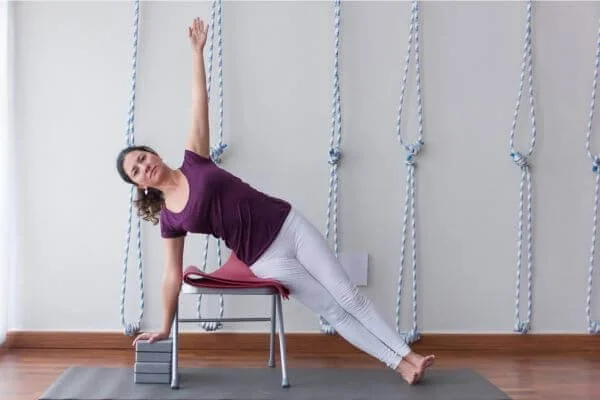
Typical Iyengar Yoga Practice with Focus on Alignment
Some styles of yoga put the rules of alignment at the forefront of the practice and therefore of their trainings. Iyengar Yoga, for example, “is a form of yoga exercise that has an emphasis on detail, precision and alignment in the performance of yoga postures”. (Wikipedia) In my experience of Iyengar classes, there is a lot of information and instruction for every posture in the class. I bet most Iyengar Yoga teachers would tell you that alignment in yoga does matter.
If your primary experience as a yoga student/teacher is from styles of yoga and yoga teachers that focus heavily on alignment, it might seem like the norm for you. You might think, “of course alignment matters! Isn’t yoga all about alignment of the body?
I appreciate the detail that many Iyengar and alignment focused yoga teachers provide….and sometimes I don’t!
There are some styles with little to no focus on alignment. I have been to some yoga classes where it seems that alignment not only doesn’t matter, but is non-existent. ….and some of those classes with no alignment cues have been my favorite and most transformative yoga practices.

Yes! I said it. I am doctor of physical therapy, anatomy professor, and yoga teacher. I emphasize Optimal Postural Alignment in my classes and trainings. And yet, I love a class that seems to throw anatomy and alignment out the door
So do I think alignment in yoga matters? YES!
Why do I think it matters even if I enjoy a yoga class in which alignment does not seem to matter? I believe a great yoga teacher knows and understands alignment of the human body and can share it without a lot of nuanced detail and instructions.
Let me share a personal story.
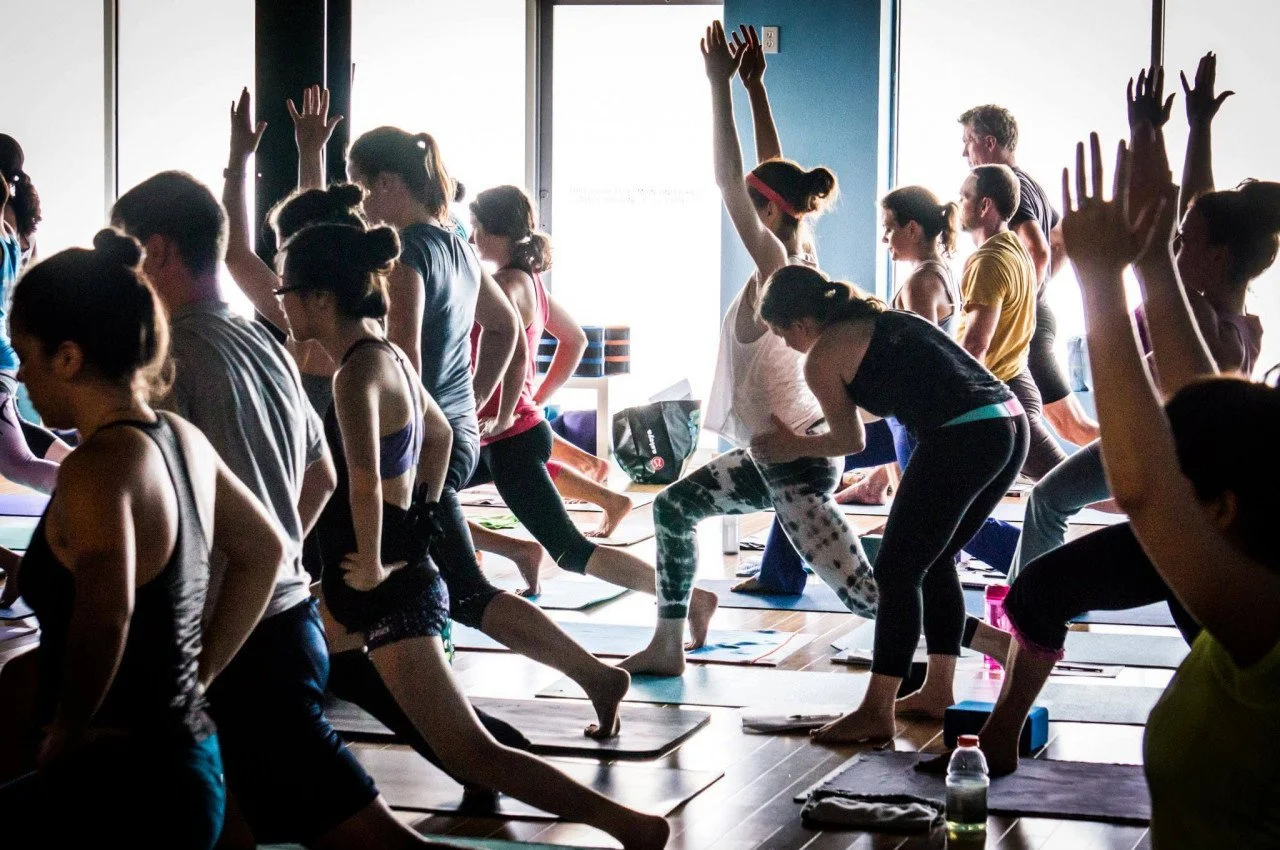
Dr. Trish Corley teaching yoga circa 2013.
When I started teaching yoga, I already had 10 years experience in physical therapy and one year experience teaching functional anatomy at a college in Houston, TX. Needless to say, I understood anatomy and alignment. I was proud of that!
After teaching yoga for a year or so, I had a mentor tell me, “You really know your anatomy and alignment.”
“Thank you!” I responded with pride.
Then she said, “Drop it.”
“WHAT? What are you talking about? It’s what makes me a great yoga teacher!! What will my students think if I stop giving them all of the alignment cues?”
I had to do some “off the mat” yoga and check in with my ego. Was I attached to my anatomy and alignment knowledge, or could I give it up?”
In the practice of non-attachment, I played around with teaching with less focus on anatomy and alignment. It was awkward at first, and then something shifted. Without so many cues and details, I created space.
In that space, I was able to put in words of encouragement and empowerment. I was able to see and connect with students in front of me. I realized too, that I could leave some of that space empty. Without my constant cuing and “correcting” students, I could just be and let them be. This not only made it easier for me to teach, I also started to experience my class sizes growing. It got me thinking that maybe alignment in yoga isn’t all that important.
Of course, I didn’t completely give up my anatomy and alignment knowledge…in fact I went on to lead Yoga Anatomy courses. When I developed a 200 hour yoga teacher training, I included a lot more anatomy than most other schools.
I even went on to develop Yoga Anatomy School.
Some of my current classes are called “Anatomy Focused Yoga Practices.” These are the classes where you will get loaded with anatomy and alignment. The intention of those classes is to teach yoga anatomy and alignment. But if you take one of my regular yoga classes, I am essential with alignment cues. I’ll likely give alignment cues, but only if they will make a difference to the students in front of me.
I don’t care if the students know how much anatomy I know. My goal is to create space for them to experience a healing and holistic yoga practice.
I don’t use alignment cues to correct or fix anyone. I use alignment cues to empower new possibilities. I might even call a pose and say nothing! I now see how my mastery of yoga anatomy and alignment allows me to be more creative and fluid in my teaching.
To put is simply, I do believe alignment matters in yoga. But why? I have spoken with hundreds of yoga teachers who say alignment matters because of safety. But how do we know if our students are safer, just because we are speaking to alignment? What about creating space to connect with and see our students? What about creating an inspiring class with your authentic voice?
Consider this. Every day, children all over the world play. But how often are they focused on alignment of their bodies when they play tag, climb the ladder, or kick the ball? The joy in playing comes from letting their bodies lead. Kids are intuitive and less worried about getting it right. They thrive in their own discoveries.
If we constantly talk about alignment in yoga as important for safety, are our students actually safer? Or are they just left more concerned abut getting in right. Do we leave them afraid to move?

My point is this. Alignment matters and, as I learned from my mentor years ago, there is a lot more to yoga than alignment.
Then why I do focus so much on anatomy and alignment at the Yoga Anatomy School? Let me tell you the real reason.
I have trained and talked to hundreds of yoga teachers and they all have one thing in common. They teach yoga; they have a job to stand in front of people and instruct them to move, breathe, and/or sit still. In other words, they give directions. It is very difficult to give directions, if you have no sense of direction.
I got my sense of direction regarding alignment from many years of studying, practicing physical therapy, and teaching functional anatomy. If you’re a yoga teacher, you probably don’t have all that time to learn. That’s why I created Balanced Postural Alignment.

Balanced Postural Alignment (BPA) is a simple road map based on principles of biomechanics that create access to a well aligned body. BPA is the key content inside all of my courses and yoga teacher trainings.
Since students rely on yoga teachers for directions, yoga teachers need to know how to give directions. It’s a lot easier (and more effective) to give directions when you know the starting point. It’s easier to teach someone how to play a game when you are clear on the rules.
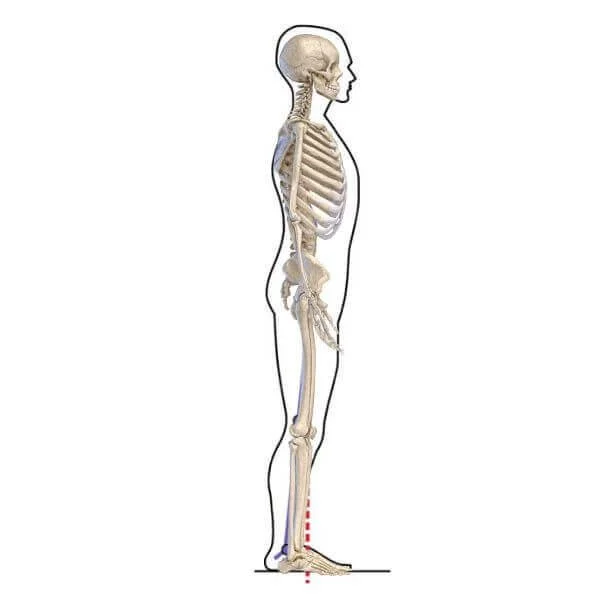
Balanced Postural Alignment from Yoga Anatomy School
Balanced Postural Alignment (BPA) is a foundational theory based on my >20 years as a physical therapist, 5 years as a functional anatomy professor, and >12 years as a yoga teacher! OPA simplifies the process of aligning human bodies to optimize health and function. It creates stability which allows for optimal functional mobility.
The “rules” of BPA are clear, and they are not strict or dogmatic. I encourage yoga teacher to learn the “rules” of alignment and then have fun changing the rules. Did you ever change the rules of a game as a kid? Sometimes it worked out to be more fun or a better game. Sometimes you go back to the original rules.
The courses and teacher trainings at the Yoga Anatomy School provide the basic “rules” of postural alignment AND the anatomy and “why” behind the rules. Teachers are encouraged to get on their yoga mat and learn through movement of their own bodies. They learn how to use alignment to create empowering and holistic yoga classes. And they are even told that is is okay to change the rules!
Whether you think alignment matters in yoga or not, I promise it is easier and more effective to teach yoga if you know the basic principles of anatomy and alignment.
Ready to teach yoga with confidence?
Discover Power to Lead 200-Hour Yoga Teacher Training in Lisbon, Portugal. Led by Dr. Trish Corley - the only yoga teacher training in Portugal taught by a Doctor of Physical Therapy.
[Learn more about the 200 hour yoga teacher training in Lisbon]
About the Author
Dr. Trish Corley, PT, DPT (physiotherapist), E-RYT 500, is the founder of Yoga Anatomy School and a former anatomy professor with over 23 years of clinical experience. She has been teaching and mentoring yoga teachers in anatomy and biomechanics since 2012.
Explore the Yoga Anatomy Online Course at TrishCorley.com/yoga-anatomy-course.
For more articles and insights, visit TrishCorley.com.