

Why Yoga Teachers Should Stop Focusing on Muscles
Teaching yoga with a focus on contracting muscle is not the most effective way. You may actually be confusing your students!
"Engage your abdominals. Contract your glutes."
Are you cuing your students like this? It's okay if you are. You probably learned from great yoga teachers to say these cues. There is nothing inherently wrong with these cues. It's just that there is a much more effective way.
There are so many muscles in the human body!
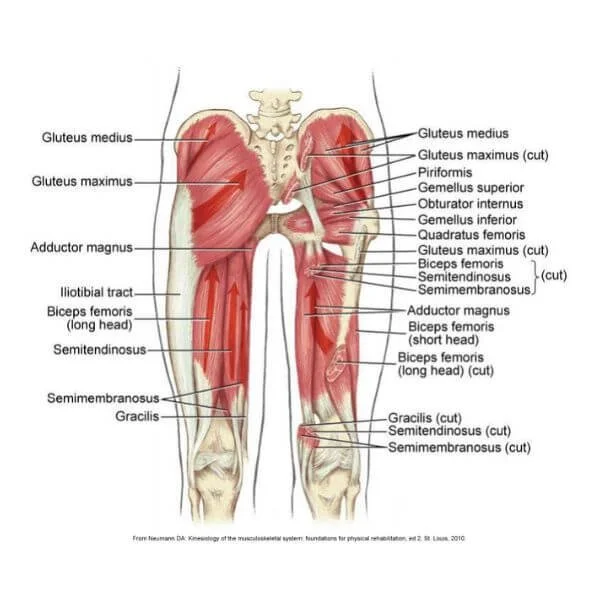
Even after years of studying and teaching anatomy, it can be difficult to remember exactly where each muscle is and what movements they are responsible for. Most people probably do know where their abdominals are and where their glutes are. But here is the problem: The abdominals and glutes are actually groups of muscles with various actions and ways to engage them. Simply saying engage these muscles is likely causing confusion.
If I hear a yoga teacher say "engage your glutes", I wonder what the intention of the cue is. Should I stabilize my hip with an isometric contraction? Should I extend my hip or rotate it? Sure, my functional anatomy focused assessment of a cue is not the average response, but most yoga students are left in confusion and unsure how to engage their glutes. While some students may feel confident in their ability to engage their glutes, are you confident they are engaging their glutes in the matter you want them to? Do you, as the teacher, even fully understand how you want them to engage their glutes?
Let’s face it. There is so much to learn about yoga anatomy. It can be overwhelming for yoga students and teachers. Let's do us all a favor and keep it simple!
Asana practice undoubtedly provides benefits to all of the systems of the human body such as the musculoskeletal, cardiovascular, digestive, lymphatic, reproductive, and nervous system. This is why yoga is so effective in improving health, and also why it can be overwhelming to understand anatomy and physiology as it relates to asana.
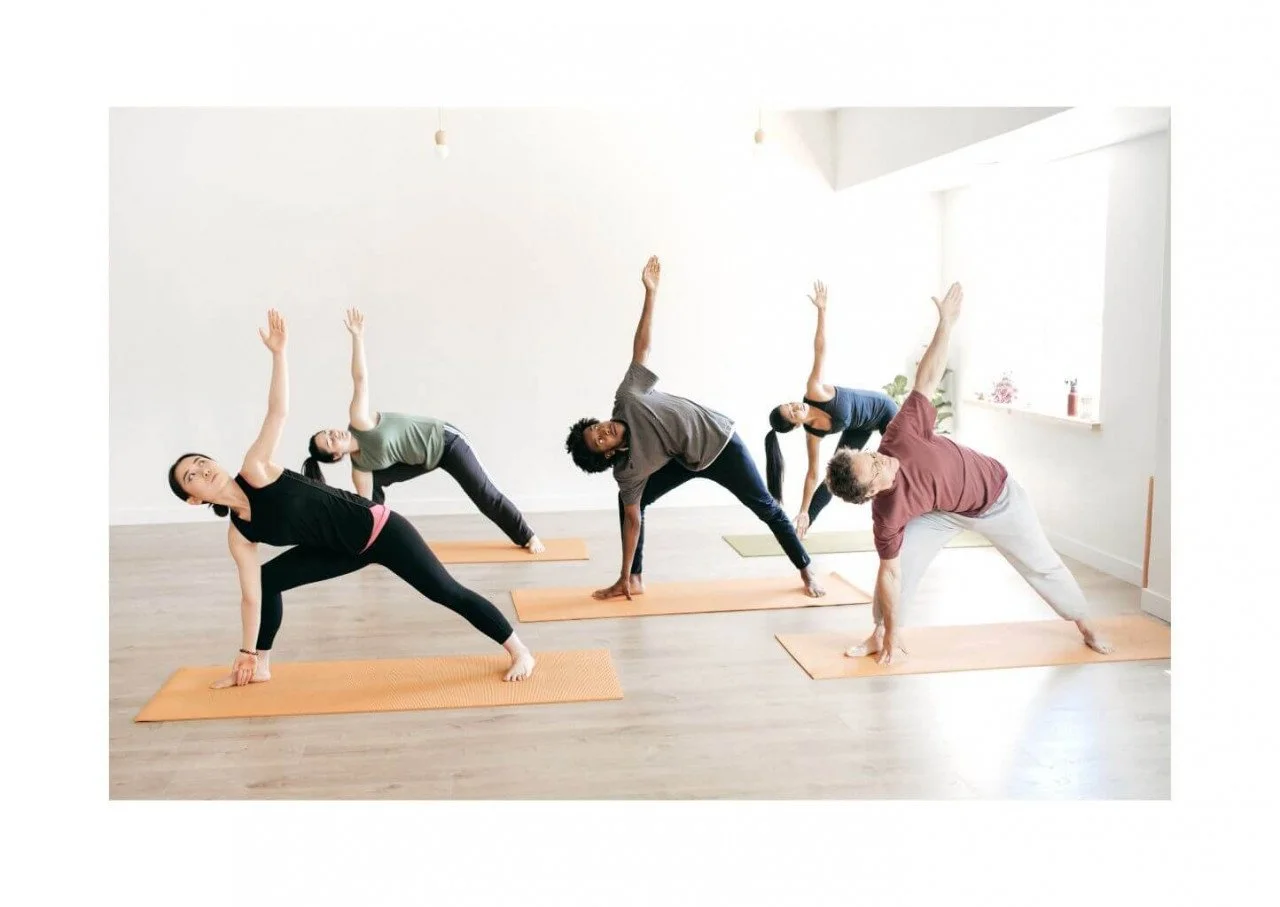
Muscle contractions are vital to asana practice. Without the muscles contracting, their is no yoga posture. The primary role of muscles is to move the bones. This is exciting news! If you can get the bones to move, the muscles are contracting!
This means that a solid understanding of bony alignment is more valuable than a deep understanding of all the muscles.
In fact, asana practice focused on bony alignment will serve to bring all of the systems into optimum alignment and therefore optimum function.
Yoga teachers should focus on the alignment of the bones when leading asana practice!
Let's take a look at why yoga teachers should focus on the bones rather than the muscles when teaching.

1. The bones are the center of the body. If they are aligned, the soft structures around them will be aligned. Consider the construction of a house. The foundation is first poured and the house is then framed out. The earth and/or yoga mat is the foundation for asana practice. Your bones are like the two by fours that create the frame of the house. In a similar way that many nails are used to hold the wood pieces together for the frame of a house, your ligaments hold your bones together in all of your joints. Without the wooden frame, there would be no support for the other materials of the house. Without your bones, the rest of your soft tissue could not maintain a strong posture. Align your bones and the rest of your body will follow.
2. Proprioception may be greater in the joints. Proprioception is described as “sensation of body position and movement using sensory signals from muscles, joints, and skin” (Bear et al, 2007, p. 810). There are numerous neurological receptors that communicate information about where your body is in relationship to other body parts and your environment. Most of the receptors are embedded in the ligaments, joints capsules, and tendons, all of which are connected to the bones at the joints. Therefore, when you focus on aligning your knees over your ankles, your bring awareness to your own body through activation of the many sensory receptors in your joints. In other words, the alignment of your bones provides access to an awareness and awakening of your where you are in this world! Bear, Mark. F et al (2007). Neuroscience: Exploring the Brain. (3rd Edition). Baltimore. Lippincott Williams, and Wilkins.
3. People know where their bones and joints are. A three-year-old can even sing “Head, shoulders, knees, and toes” and point to their bones and joints. In my own practice, I often check if my ankles, knees, hips, and shoulders are in one line (particularly in tadasana and chatarunga). And if they are, I am confident that I am engaging the appropriate muscles to engage and relaxing the appropriate muscles to relax.
It is that simple. It's time to provide cues to your students that they can easily follow and discover optimal alignment. Instead of "contract your glutes" in bridge pose, you could say, "lift the front of your hips up towards the ceiling." The movement of the front of the hips up towards the ceiling is relatable and easy to follow. It will cause hip extension. And hip extension is a primary action of the glutes! So you student gets all they need, but with simplicity and ease!

Ask yourself, is it easier to follow the cue to “straighten your knee” or “contract your quadriceps”? Considering that there are several ways to contract my quadricep, I am not clear what to do. However, if I focus on bending my knee, it is straightforward. My knee is either bending or is not.
Do want your students to return to your classes because they are finally getting what they want out of their yoga practice with you? You can learn to teach without confusing your students. The method is simple!
At Yoga Anatomy School, we emphasize bony alignment with Balanced Postural Alignment. This method gives teachers an easy way to be confident and highly effective yoga teachers.
Ready to teach yoga with confidence?
Discover Power to Lead 200-Hour Yoga Teacher Training in Lisbon, Portugal. Led by Dr. Trish Corley - the only yoga teacher training in Portugal taught by a Doctor of Physical Therapy.
[Learn more about the 200 hour yoga teacher training in Lisbon]
About the Author
Dr. Trish Corley, PT, DPT (physiotherapist), E-RYT 500, is the founder of Yoga Anatomy School and a former anatomy professor with over 23 years of clinical experience. She has been teaching and mentoring yoga teachers in anatomy and biomechanics since 2012.
Explore the Yoga Anatomy Online Course at TrishCorley.com/yoga-anatomy-course.
For more articles and insights, visit TrishCorley.com.