

Why Do Your Joints Crack in Yoga?
Learn where those "pops" and "cracks" are coming from.
Have you ever wondered why your joints crack and make noises on and off your yoga mat? You're not alone! It's a common phenomenon that many people experience, and it often raises questions about whether it's safe or harmful. As a physical therapist and yoga teacher with a focus on anatomy, I'm here to shed some light on this intriguing subject and help you understand why those joints crack, along with what science says about its potential risks.
The Mystery Behind the Popping Sounds
Let's start with the basics. The cracking sound you hear when you crack your knuckles or any other joint is often the result of a sudden release of gas, specifically nitrogen, from the synovial fluid in your joints. This fluid acts as a lubricant, reducing friction between the bones in your joints, allowing them to move smoothly.
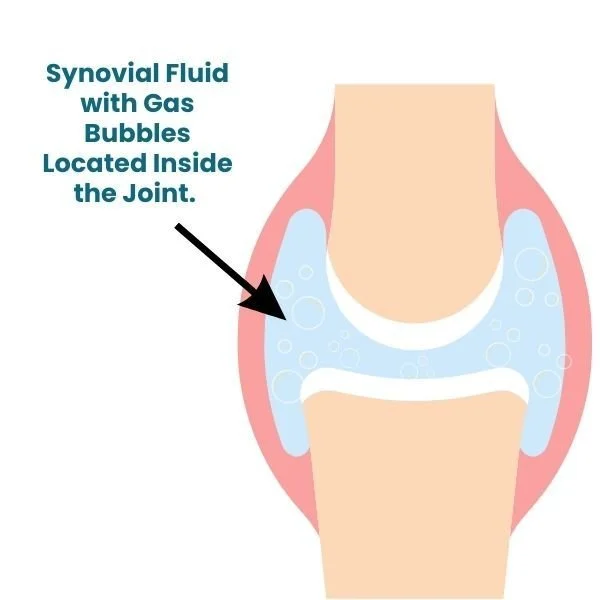
When you pull or twist a joint, you create a change in pressure within that joint. This change in pressure can cause the gas dissolved in the synovial fluid to form bubbles. When these bubbles burst or collapse, you hear that familiar popping or cracking sound. You cannot recreate this popping noise right away because there is a refractory period for the gasses to build back up. That is, it takes some time for new gas bubbles to form before they can be released for another popping noise.
“Why does it feel so good to crack my knuckles?”
The release of the gasses may also stimulate the surrounding nerves which communicate to the surrounding muscles to relax. The "feels so good" sensation is likely a combination of the release of the gas bubbles and a relaxation of the surrounding muscles.
Cracking Knuckles - Is it Harmful?
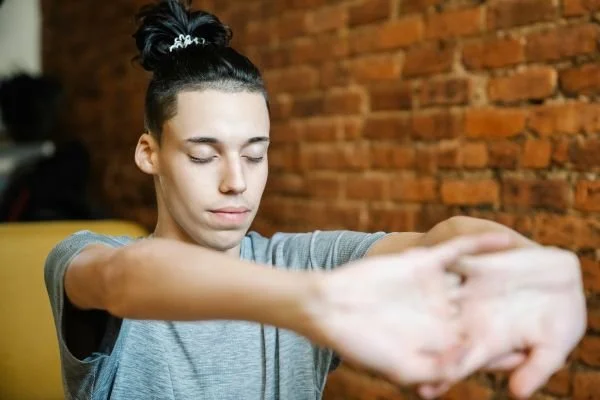
The big question on many minds is whether cracking your joints is harmful. The answer, according to current scientific understanding, is generally no. A study by Boutin, Netto, Nakamura, et al investigated the potential effects of knuckle cracking on hand function and found no significant difference in hand function between those who cracked their knuckles and those who didn't. [The Journal of the American Board of Family Medicine (JABFM), 2011].
Research suggests that cracking your knuckles does not lead to arthritis, as the old wives' tale might suggest. So, go ahead and crack your knuckles if it brings you temporary relief or satisfaction. While the evidence on other joint cracking is limited, it's generally considered safe as well. If a joint naturally pops or cracks during movement and isn't accompanied by pain or discomfort, it's likely not a cause for concern. However, if you experience persistent pain, swelling, or reduced joint mobility, it may be something to be concerned about. I’d recommend consulting a physical therapist or your preferred healthcare provider.
Joints Cracking Versus Tendons Snapping?
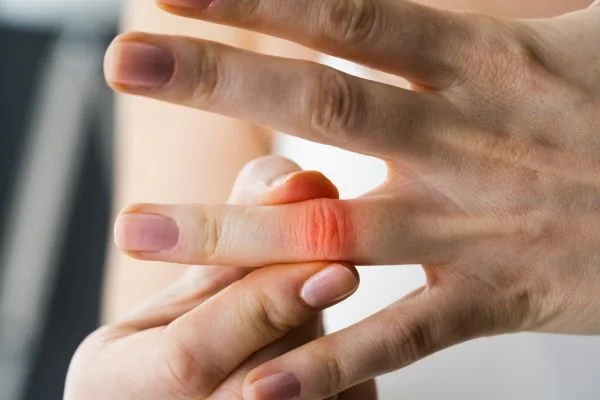
Now, let's talk about another phenomenon related to joint sounds. Sometimes, it has nothing to do with the gas in the joints. Audible popping at the joints may actually be the sounds of tendons snapping. This is commonly encountered during abdominal exercises on the floor such as leg lifts or abdominal twists/bicycles.

The noise heard (and often felt) when moving the body in particular ways is often related to the tendons. Tendons are the rope-like structures that connect muscles to bones. Tendons cross over joints. As a joint is moved into different ranges of motion, a great amount of force may be put on the tendon. In many cases, the tendon crosses over a bony prominence in the joint or other structures that exist in the joint. When the tendons are forcefully pulled or stretched over these structures, a rubbing or snapping may occur. This is what causes the "snap" and "pop" in your joint. The snapping sensation or sound you might experience in the hips during certain floor-based abdominal exercises is often associated with the iliotibial (IT) band or the psoas tendon.

Typically, this snapping is not a cause for concern, especially if it doesn't cause pain or discomfort. It occurs due to the mechanics of these tendons sliding over the bones and can vary from person to person. In many cases, it's harmless and simply a result of your body's unique anatomy. You can distinguish gas bubbles popping from tendons snapping based on the frequency that you can reproduce the sound. The refractory period for gasses to build up means that you cannot repetitively crack you knuckles. However, when the popping is related to tendons, it is easy to reproduce repetitively. So if you hear or feel the popping sound with every repetition of your abdominal exercise, it is likely your tendons!
After any type of injury or damage to human tissue, scar tissue builds up. If a joint has been injured or overused, it is likely scar tissue has developed. In a joint with scar tissue, it is very common for the tendons to snap over the scar tissue. Therefore, it is common for clients with a history of injury to report that their previously injured joint "always cracks" now. Provided the movements associated with the cracking is painless, there is no reason for concern. Whether related to an old injury or not, if you do experience pain, discomfort, or the snapping becomes more pronounced, it's wise to consult a physical therapist or healthcare professional. They can help you adjust your alignment or recommend specific exercises to alleviate the issue and ensure that your practice remains safe and comfortable.
A skilled yoga teacher will also be able to help you access adaptations or alternative movements to avoid pain.
Conclusion
In summary, the cracking of joints, including knuckle cracking, is generally harmless and not associated with serious health concerns. It's a natural occurrence caused by the release of gas bubbles within synovial fluid. As long as joint cracking doesn't cause pain or discomfort, there's no need to worry. When it comes to snapping tendons in the hips during abdominal exercises, it's usually a benign phenomenon related to the movement of tendons over bony structures. Again, if this snapping doesn't result in pain or discomfort, it's not typically a cause for concern.
Yoga can be an excellent practice to maintain joint health and flexibility. In my experience as a yoga teacher, many students ask about the popping and cracking sounds in their body. If you are a yoga teacher, you probably have students ask you questions about your body all the time.
Ready to teach yoga with confidence?
Discover Power to Lead 200-Hour Yoga Teacher Training in Lisbon, Portugal. Led by Dr. Trish Corley - the only yoga teacher training in Portugal taught by a Doctor of Physical Therapy.
[Learn more about the 200 hour yoga teacher training in Lisbon]
About the Author
Dr. Trish Corley, PT, DPT (physiotherapist), E-RYT 500, is the founder of Yoga Anatomy School and a former anatomy professor with over 23 years of clinical experience. She has been teaching and mentoring yoga teachers in anatomy and biomechanics since 2012.
Explore the Yoga Anatomy Online Course at TrishCorley.com/yoga-anatomy-course.
For more articles and insights, visit TrishCorley.com.