

The Anatomy of Energy in Yoga
Is it weird to talk about energy in yoga? Or is it science?
Have you noticed how much yoga teachers like to talk about energy? Have you ever thought it's weird? I did!!
When I first started practicing (and even when I started teaching) yoga, I had friends say things like, “Hey Trish, you have great energy.” Quit frankly I thought they were weird. Then one day I was teaching a yoga anatomy training focused on the nervous system. As I explained how the nerves relay messages throughout the body, I realized I was actually talking about energy and in a concrete, scientific way! It inspired me to shift my view about weird yogis talking about energy.
Maybe the yogis just had a better sense of the nervous system's energetic functions!
The concept of energy can be brought all the way down to the level of atomic particles and broadened all the way out to the unknown mysteries of the universe. Opinions on the sources of energy vary for sure, but science has shown that energy is transmitted from nerve to nerve and that is what allows us to function (and express ourselves🤗). Without the transmission of energy from the spinal cord to the muscles and back, the muscles are simply unable to contract and do their job of moving your bones; of bringing you into and out of yoga poses.
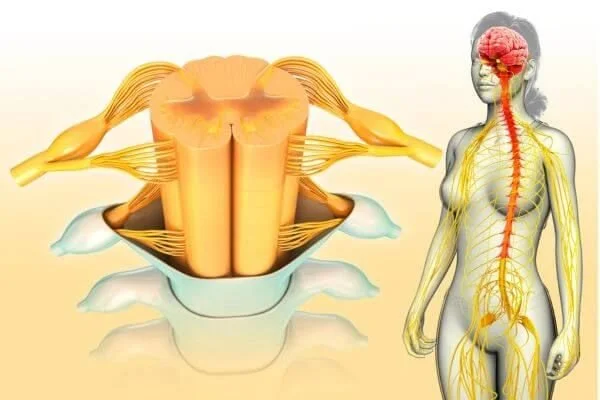
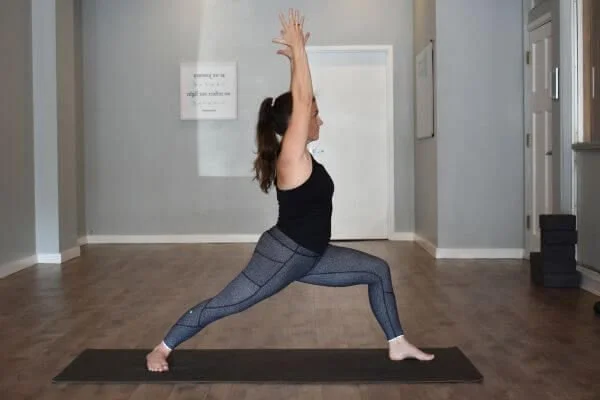
What path does that energy really take? To start, your brain must first make the decision to move the body in a certain way. For example if you want to move into Warrior I, your brain decides it is time for Warrior I. Your brain then transmits the message to your muscles to move in a way that will bring one leg forward, one leg back, arms up towards the ceiling, etc. This message travels via electrical signals that start in your brain. The messages then travel through your spinal cord and then through your peripheral nerves. (Peripheral nerves are the nerves that extend out through the arms and legs to the fingers and toes). Eventually the messages make it to the exact muscle fibers that will contract to make your feet step apart and your arms rise to create the shape of Warrior I. In neuroscience the route the messages take from your brain to your muscles is known as the motor pathway.
While the messages needed for your body to move and come into Warrior I travel down the motorpathway, messages from your body about sensations travel up to the brain via the sensory pathway. For example, the sensation you feel of your foot touching your yoga mat starts at the skin. Your joints and muscles in your foot also sense the contact with the ground and the movement of your own body. Messages about these sensations travel up your peripheral nerves from skin, joints, and muscles to the spinal cord. From the spinal cord, the messages travel back up to the brain. At the level of the brain, you become aware (either consciously or unconsciously) of what your ankle/foot is feeling as in contacts the ground in Warrior I. You then make a decision on how to react to the sensation. If there is any discomfort, your brain will likely send messages down the motor pathway to get the ankle to move into a more comfortable position. If it feels good, your brain will likely send messages down the motor pathway to stay right where you are. Of course there are times where your have to make a decision of what message your brain should send down to the ankle. Do you move or stay still? The practice of asana is in large part the practice of increasing conscious awareness of such decisions. In other words, yoga is about getting conscious to the messages of your nervous system.
Messages are constantly flowing up and down the two pathways. How exactly, though, are those messages delivered?
The quick answer: ENERGY!
During your yoga practice, the fascinating process of transmitting essential motor and sensory information throughout your body relies on the intricate dance between electrical and chemical impulses within your neurons. When you engage in a pose or focus on your breath, it all starts with an initial stimulus that sets off an incredible chain reaction. Imagine this: within your neurons, there's a delicate balance of charged ions, like sodium and potassium, creating an electrical potential difference across the cell membrane. This resting state is crucial, maintaining the equilibrium until something triggers a change.
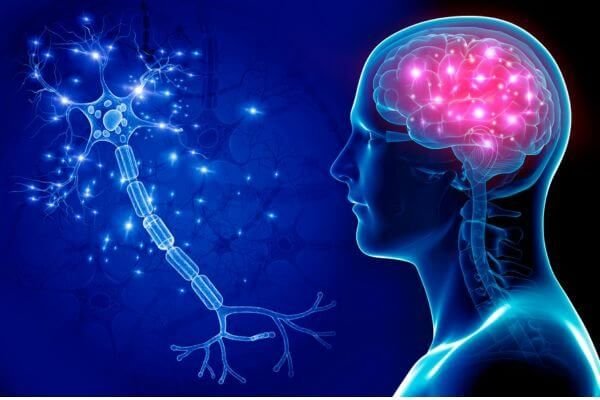
As you move deeper into your practice, let's say you hold a challenging pose. Your neurons receive signals from your muscles, indicating the position and tension. When these signals reach a certain intensity, a remarkable shift occurs. Voltage-gated ion channels embedded in your neuron's membrane swing open, allowing positively charged ions to rush in. This influx of ions causes a momentary flip in the neuron's charge, an electrical spike known as an action potential. Picture it like a wave of energy traveling down a wire, in this case, your neuron's elongated projection called an axon.
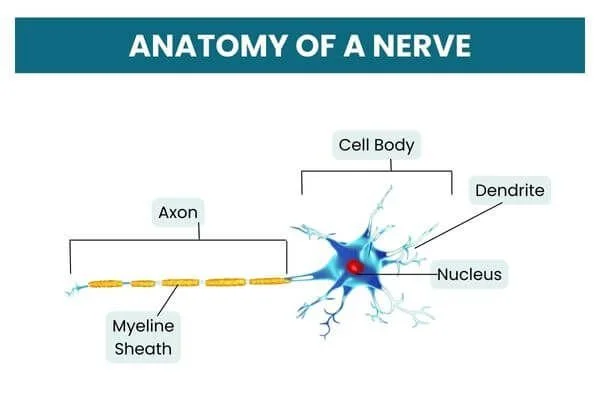
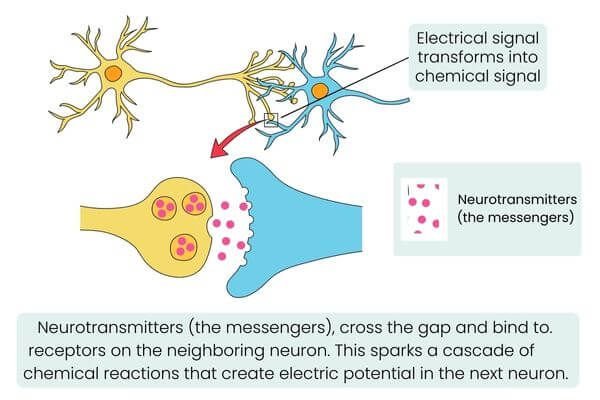
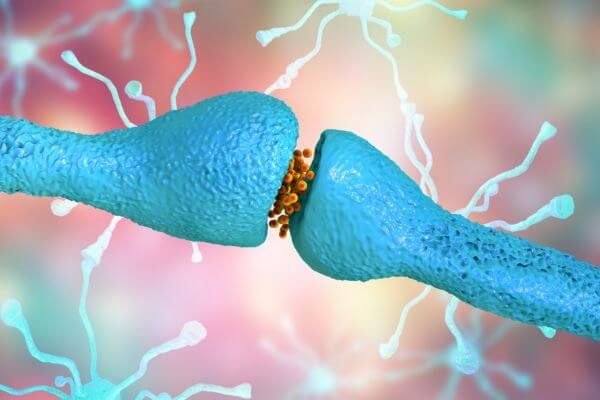
Here's where the magic takes a chemical turn. Along the axon, you have these incredible insulating layers called myelin sheaths, speeding up the transmission like a well-greased slide. At the end of the line, your neuron's axon terminal, the electrical signal transforms into a chemical one. Tiny sacs within the terminal release neurotransmitter molecules into the synapse – the minuscule gap between your neuron's ending and the next neuron's beginnings. These neurotransmitters are like messengers, crossing the gap and binding to receptors on the neighboring neuron. This binding sparks a cascade of chemical reactions, generating an electric potential in the receiving neuron. And just like that, the torch is passed, the baton is handed over, and your body interprets the information: whether to move deeper into that pose or find balance in the midst of movement.
As you flow through your practice, remember that beneath each movement and each breath lies this intricate symphony of electrical sparks and chemical messengers, weaving together to guide you on your journey.
Conclusion
When yoga teachers speak about people's energy, they are tapping into a concept that resonates with the intricate workings of the nervous system. As you flow through your practice, the exchange of electrical and chemical signals within your neurons not only coordinates movement and sensory perception but also influences your overall sense of vitality and well-being. The electrical impulses that travel along your neurons carry not only information but also energy in the form of charged ions. Moreover, the release of neurotransmitters at synapses can impact your mood, focus, and even your sense of calmness.
This dynamic interplay of signals and substances is the scientific foundation that underpins the notion of energy in yoga. Maybe yogis are not so weird after all!
.By cultivating awareness of these neural processes through breath, movement, and mindfulness, you can guide your students to harness and balance their inner energy, and create strong connections between mind, body, and spirit...whether it seems weird or not!
If you want to be a yoga teacher that understand yoga anatomy and basic neuroscience to confidently lead your students, the Yoga Anatomy School is for you!
Ready to teach yoga with confidence?
Discover Power to Lead 200-Hour Yoga Teacher Training in Lisbon, Portugal. Led by Dr. Trish Corley - the only yoga teacher training in Portugal taught by a Doctor of Physical Therapy.
[Learn more about the 200 hour yoga teacher training in Lisbon]
About the Author
Dr. Trish Corley, PT, DPT (physiotherapist), E-RYT 500, is the founder of Yoga Anatomy School and a former anatomy professor with over 23 years of clinical experience. She has been teaching and mentoring yoga teachers in anatomy and biomechanics since 2012.
Explore the Yoga Anatomy Online Course at TrishCorley.com/yoga-anatomy-course.
For more articles and insights, visit TrishCorley.com.