

Cues First: Learn Yoga Anatomy With Ease
A proven and simple method to learn yoga anatomy with ease.
Do you think there a way to learn yoga anatomy with ease? Not, sure? Keep Reading
As yoga teachers, our goal is to guide our students safely and effectively through their practice. I bet you agree that understanding anatomy is crucial to achieving this goal, yet anatomy can often feel overwhelming.
Many teachers struggle with complex anatomical terms and the pressure to stay up-to-date with the latest scientific research.
If you are like most yoga teachers, the idea of anatomy my leave you in a state of overwhelm!
I have taken part in a lot of yoga teacher trainings. In my first 200 hour training, I was taught the names of muscles and what they do and I was given little insight on how to apply that to yoga. This left me really frustrated, and even like I wasted my time and money.

In many of my other trainings, we spent a lot of time memorizing cues. Sometimes we practiced teaching the cues. This was helpful for me, but I know many others who did not find it helpful. A few years ago when I heard one of my colleagues complain that they did not learn anatomy, it finally clicked.
We learned the cues, but most people did not understand the anatomy behind the cues.
I talked to more participants from my trainings and discovered that they felt confident in their ability to teach and to even select impactful cues in real time, but they still didn’t understand the anatomy behind the cues.
That’s when I put it all together!
Yoga teachers need to know how to cue. It’s essential!
And to be highly impactful, yoga teachers need to know the anatomy behind the cues.
This is why I put together the Balanced Posture Alignment Framework. It is an effective approach to learning anatomy that simplifies the process and enhances teaching skills.
We start with the cues and then explore the anatomy that support the cues!
This is the way to learn yoga anatomy with ease!
Here’s why this method works so well.
Immediate Practical Application:
One of the biggest challenges yoga teachers face when learning anatomy is the disconnect between theoretical knowledge and practical application. Staring with anatomy-informed cues bridges this gap by providing immediate, actionable instructions that teachers can use in their classes. For example, the cue "stretch your toes out away from each other" directly engages the muscles and bones in the foot, making the anatomical concepts tangible and relevant.
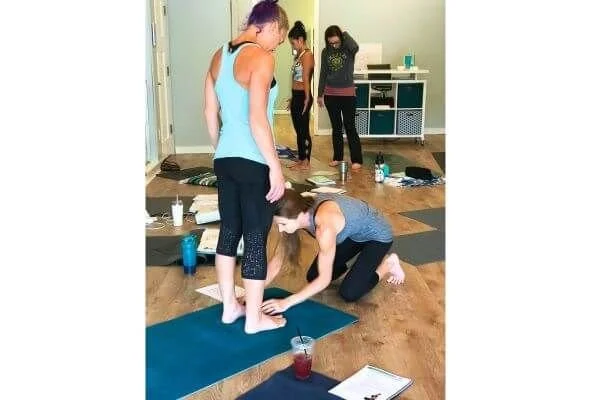
By starting with cues, teachers can see and feel the anatomy in action. This hands-on approach not only makes the information more relatable but also more memorable. When you practice or teach a cue like this, you’re not just memorizing facts; you’re experiencing how anatomy functions within the context of yoga.
Enhanced Learning through Experience
Learning through experience is a powerful educational tool. When yoga teachers use anatomy-informed cues in their practice, they can immediately observe the effects on their own bodies and those of their students. This experiential learning helps to reinforce the anatomical concepts in a way that reading from a textbook cannot.

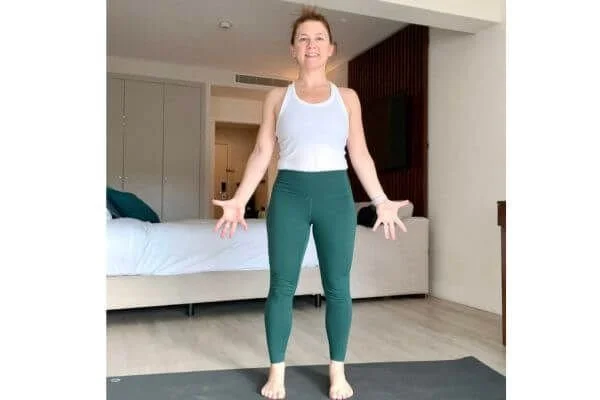
For instance, when you cue "stretch your toes out away from each other" in Tadasana (Mountain Pose), you can physically feel the activation of the foot muscles and observe the spread of the toes. This real-time feedback helps to cement the understanding of the underlying anatomy. Repeating this process in different poses enhances this understanding, making the anatomical knowledge second nature.
Simplified Initial Learning Curve
Traditional anatomy learning can be daunting with its complex terminology and detailed structures. For many yoga teachers, this complexity can be a barrier to fully engaging with the material. Anatomy-informed cues simplify this initial learning phase. By focusing on specific, practical cues, teachers can gradually build their anatomical knowledge without feeling overwhelmed.
Starting with cues allows teachers to learn in manageable chunks. Instead of trying to memorize all the muscles and bones at once, they can focus on understanding a single cue and the related anatomy. Over time, this method builds a solid foundation that can be expanded upon as teachers become more comfortable with the material.
Increased Confidence and Teaching Effectiveness
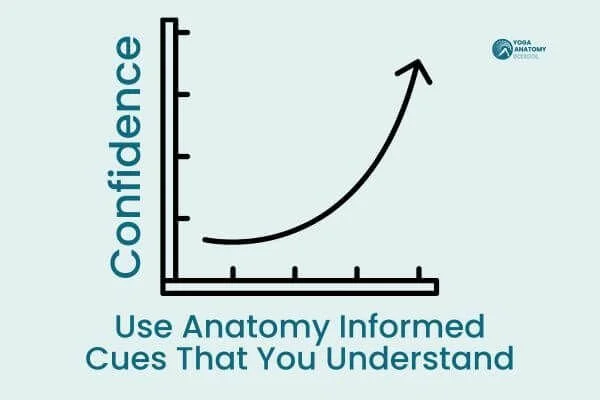
Confidence is key when teaching yoga. Teachers who understand the anatomical basis of their cues are more confident in their instruction, which enhances their teaching effectiveness. When you know why you are giving a specific cue, you can communicate more clearly and respond to students' needs more effectively.
Progressive Deepening of Knowledge
Once teachers are comfortable with basic anatomy-informed cues, they naturally progress to deeper anatomical understanding. The initial success and confidence gained from using these cues can spark a desire to learn more about the body's intricate workings.
I’ve been teaching yoga anatomy for over 11 years now and the feedback from teachers who learn the cues first system is astounding.
“That’s it? This makes it seem so easy?” - C.W. Yoga Teacher
Ready to teach yoga with confidence?
Discover Power to Lead 200-Hour Yoga Teacher Training in Lisbon, Portugal. Led by Dr. Trish Corley - the only yoga teacher training in Portugal taught by a Doctor of Physical Therapy.
[Learn more about the 200 hour yoga teacher training in Lisbon]
About the Author
Dr. Trish Corley, PT, DPT (physiotherapist), E-RYT 500, is the founder of Yoga Anatomy School and a former anatomy professor with over 23 years of clinical experience. She has been teaching and mentoring yoga teachers in anatomy and biomechanics since 2012.
Explore the Yoga Anatomy Online Course at TrishCorley.com/yoga-anatomy-course.
For more articles and insights, visit TrishCorley.com.